
13th National Parliament Election: Election or Selection?
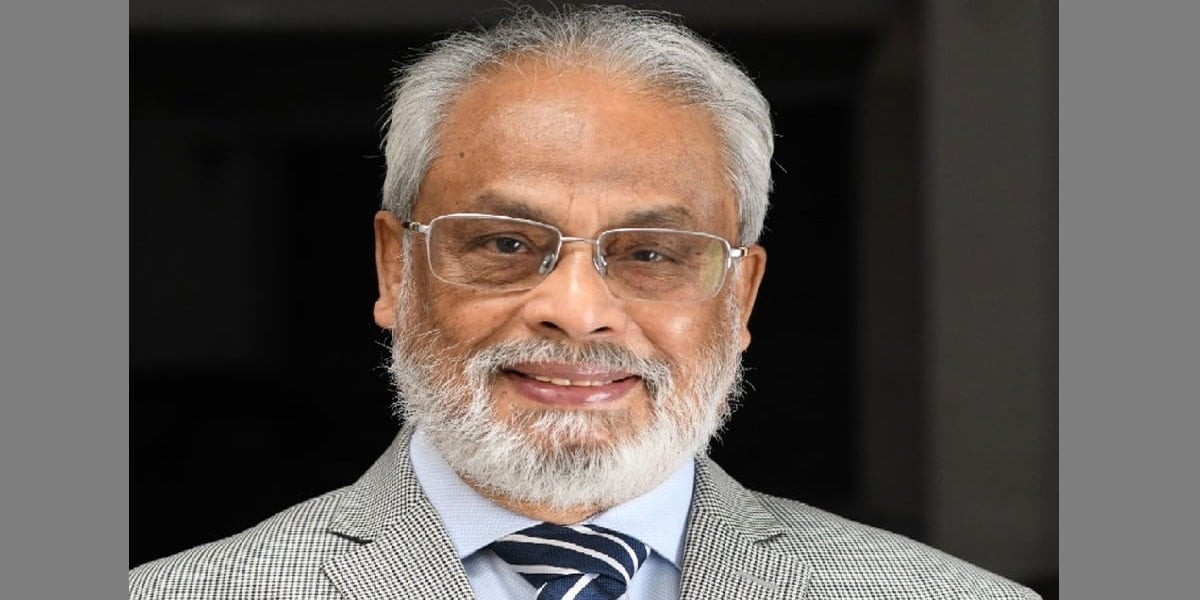
Ghulam Muhammed Quader, Chairman Jatiya Party
Published at : 28 March 2026, 11:46 am | khaborerkagoj
In my previous writing, I also said that the results were predetermined. At that time, I could not present clear evidence or enough arguments to support the claim. I am presenting below some data which could be treated as proof in support of my above claim.
According to the Election Commission (EC), total number of voters is 12,77,11,793 (twelve crore, seventy-seven lacs, eleven thousand, seven hundred and ninety three); total number of polling centres is 42,761 (forty two thousand seven hundred and sixty one); total number of polling booths is 2,44,659 (two lacs forty four thousand six hundred and fifty nine); Time of voting is from 7.30 in the morning to 4.30 in the evening, 9 (nine) hours or 540 (five hundred forty) minutes.
EC claims 59.44 % voters cast their vote that shows 59% of 12,77,11,793=7,59,11,890 voters
Average voters in each polling booth =7,59,11,890÷2,44,659 =310.27 voters.
Total time 9 hours or 540 minutes, time available for each voter is 540÷310.27=1.74 minutes
It is not possible for a single voter to cast his vote on two separate ballot papers maintaining several other steps like verification, collection of ballots and deposit in two separate boxes within this short period of time. Then also maintaining this speed for full 9 hours without any break in all the polling booths of a polling centre, in all the voting centres of a constituency and in all the constituencies throughout the country is more than impossible.
So, the voter turnout as declared by EC may be considered erroneous/made up and the results based on that imperfect/manipulated.
Now let us try to determine what could be total number of voters that the existing facilities (of total polling centres and polling booths) were in position to accommodate within the designated time of 9 hours.
What has been gathered from different sources that a voter needs at least 3 to 4 minutes to complete all necessary formalities and two ballot papers to cast his or her vote. In case of 3 minutes time for a voter, a total of (540 minutes ÷ 3 minutes) 180 voters can cast vote in a single polling booth; total voters in all the polling booths are 180×2,44,659=4,40,38,620; which is (4,40,38,620÷12,77,11,793) ×100= 34.48%.
To accommodate this 34.48% average voter turnout, we need to assume all the polling booths in all the constituencies are to keep up this pace throughout the entire period of 9 hours. This cannot be a possible scenario. By and large polling booths were empty at least half of the time as gathered.
In that case, the total voter turnout would be 4,40, 38,620 ÷2= 2,20,19,310 (two crore twenty lacs nineteen thousand three hundred ten); which is 17.24%
In case, a voter needs 4 minutes to complete casing, in an average (540÷4) 135 voters can vote in a single booth; total voters in all the pooling booths are 135×2,44,659= 3,30,28,965; which is (3,30,28,965÷12,77,11,793)×100 =25.86% considering the fact that by and large polling booths were empty at least half of the time, the voter turnout would be half of the above.
In that case, voter turnout would be 1,65,14,482.5 (one crore, sixty-five lacs, fourteen thousand four hundred eighty-two point five); which is 25.86÷2=12.93%
Let us assume that half of the voters completed their voting within 3 minutes and the rest half took 4 minutes to vote which is a probable reality. Say, in an average half of the time the voting booths were in use (as has been gathered from different voters across the country) meaning busy collecting votes.
Total voters turn out would be (2,20,19,310+1,65,14,482.5) ÷2=1,92,66,896.25 or one crore ninety-two lacs sixty-six thousand eight hundred ninety-six point twenty-five).
Voter turnout in percent of total voter would be (17.24% + 12.93%) ÷2=15.085%
Approximately 2 crore voter or 15% of the voters participated in the voting. Election with such a low turnout may not be considered participatory.
This shows a total number of voters abstained from voting is 12,77,11,793–1,92,66,896 = 10,84,44,896.75 (ten crore eighty-four lacs forty-four thousand eight hundred ninety-seven.)
Approximately, 11 crore voters or 85% of the voters did not go for voting.
Fake votes created would be 7,59,11,890 -1,92,66,896.25= 5,66,44,994 or approximately five and half crore in number.
Under the above the circumstances the result of ‘referendum’ in favour or YES vote, 4,72,25,980 and against or NO vote, 2,19,60,231; voters’ participation of 60.19% really may not be considered to have any significance.
It is shocking to see possibility of a huge number of fake votes created through fraudulent means. It is a matter of concern as to the purpose of doing that. There could be two reasons. One is to show the election participatory though not inclusive to make it acceptable as free. The other reason could be very alarming that the extra ballots were created in favour of some candidates to make them winner as per a pre-fixed design.
If that be so, the election may not be considered as such and can be described as selection. The similar things happened in 12th parliamentary election exactly for the same above purposes.
I spoke in 12th National Parliament and described the arithmetic of voter turnout in the same way. I wrote article in English and Bangla and those were published in the daily Sun, March 28, 2024 (How was 12th National Parliamentary Election?) and The Daily Prothom Alo, March 27, 2024 ( দ্বাদশ সংসদ নির্বাচন আসলে কেমন হলো)
Under the above scenario political stability which was the main objective of this election could be a challenge. We saw similar things in the recent past, the aftermath of 12th National Parliamentary election and the consequences.
It is to be seen now why such a big portion of population did not go for voting. Was it that they did not find the election competitive or did not expect anything better irrespective of what would be the outcome? Or was it that they did not see candidates or party of their liking? One point is clear here; BAL voters and minority community voters did not vote to any of the contesting parties. The myth was created probably to justify the huge fake votes generated. It can also be seen that all the participating parties including BNP, Jamat alliances and others in total do not have that big public support as is being accepted after the election. It may also be concluded that Islamist politics failed to obtain that penetration in our society as is being apprehended.
THE END
[The writer of this article is Ghulam Muhammed Quader, Chairman Jatiya Party]
Article Published LinK: https://english.khaborerkagoj.com/opinion/805105