Bangladesh’s 13th Parliamentary Election: Neither Free Nor Fair
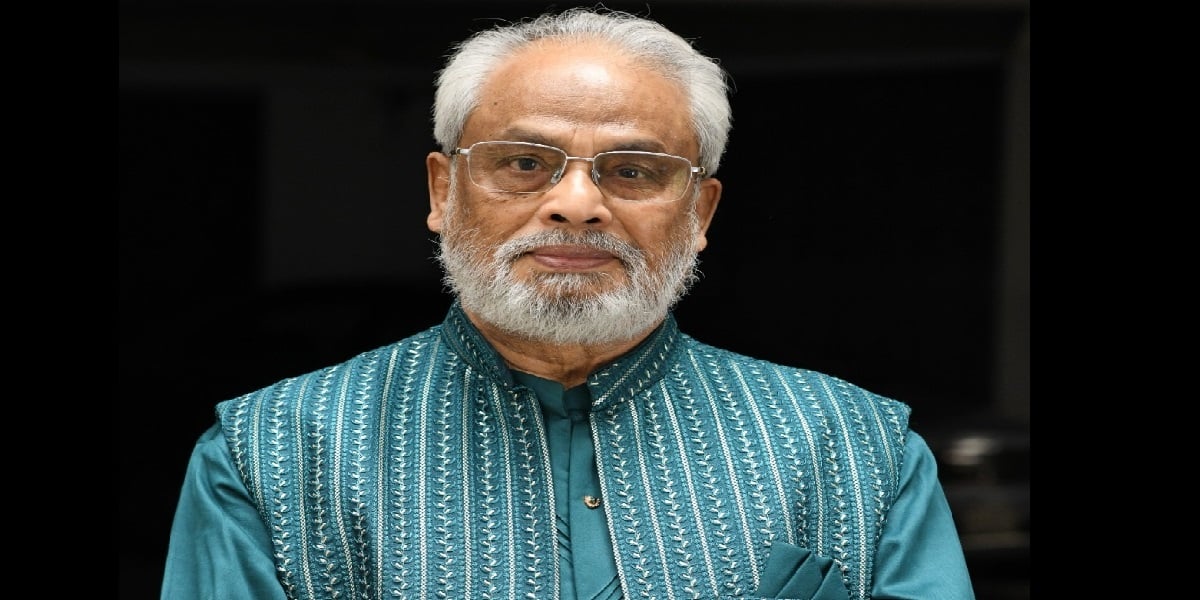
By Ghulam Muhammed Quader
Published at : 29 March 2026, 10:51 am | khaborerkagoj
I had already shared my opinion on this matter earlier. I said that this was not a good election. Good election means — election that properly reflects the will of the people. As per definition a good election must be “free” and “fair.”
“Free,” means all voter and all political parties (who believe in lawful or constitutional means for change of government) should be “free” to participate in the election.
Therefore, the concept of “free” incorporates inclusiveness. Not only all voters but all political parties as mentioned are to be allowed to participate in the election freely without any barrier.
However, when participation by all parties is not there for any reason, legitimacy is sought by emphasizing public participation, claiming that “most people participated in voting,” and thus calling it a “participatory” as such “inclusive” election. We saw something like this in the 12th parliamentary election not long ago. In that election Bangladesh Nationalist Party (BNP) along with its allies boycotted the election and demanded the election to be held under a neutral Caretaker Government. Bangladesh Awami League (AL) government did not agree and completed the election without those parties. AL at that time took the same plea that even if it was not inclusive it was duly participatory by showing inflated voter turnout.
In the 13th National Parliamentary election, the AL was barred from participating by an executive order. Moreover, several other parties, including the Workers Party and Jasad which were identified as their allies, were indirectly kept out of the election through imprisonment, oppression, and by creating a violent environment against those.
The AL is the oldest political party in Bangladesh, with a glorious past. It led the struggle for people’s rights on many issues including the movement for autonomy and the War of Independence. By any measure, it is one of the two major political parties in Bangladesh.
In terms of public support, it is generally believed that the Awami League and other parties which were excluded represent at least half of the country’s population. Therefore, in the absence of these parties, it cannot be said that the 13th national parliamentary election was “free.”
As before, it is found that efforts are being made to make it acceptable by claiming, though it was not inclusive but had spontaneous public participation, as such may be considered free. As regards that it may be said, arithmetic calculation from the capacity of voting (total voting centres, total number of pooling booths and the available total time) voting pattern collected from various constituencies; voter turnout in an average could be about 15% and not 59.44% as has been claimed by Election Commission (EC).
So, the election was neither inclusive nor participatory. (Detail arithmetic calculation has been provided in another write up, ’13th National Parliamentary Election; Election or Selection?)’
“Fair” means equal opportunity for all parties and a neutral environment. The concept of fairness includes a level playing field for all participating parties and neutrality in the election environment which refers to free from the influence of money and muscle.
From the very beginning, Jatiyo Party (JP) did not receive neutrality or equal opportunity from the Election Commission, the government, or any officials involved in the election process.
From the time the interim government took office until election day, normal political activities, such as rallies, gatherings, and processions, were not permitted. Law enforcement agencies, either directly or under their patronage, different political parties/groups like Anti-Discrimination Student Movement, Gono Adhikar Parishad, National Citizen Party (NCP), Jamaat-e-Islami (JI) and Bangladesh Nationalist Party (BNP) created mob and attacked the JP establishments and political programs. Party members were injured; offices were vandalized and set on fire. Many leaders and activists were arrested, jailed, or forced to flee as were implicated falsely if different criminal cases.
Three candidates fought election from inside jail as they were unjustly implicated in cases and jailed before the election. Despite allowed bail, they were kept imprisoned through new cases. Two candidates had to withdraw from the election as their party workers did not feel safe.
Leaders of Jamaat alliance received protocol and facilities from government officials as if they were important state figures. BNP alliance leaders received similar treatment. JP did not receive that. State media gave opportunities to both sides, but not to JP.
Furthermore, both Jamaat and BNP alliances spent thousands of crores of taka. They started spending huge amount of money more than a year before till election day, with an intention to influence voter’s free judgement. During the election, minority communities, AL supporters, and in some cases JP supporters were threatened by opponents with violence, vandalism and false cases, if they did not vote as instructed.
Vote rigging was rampant as reported by opponents of JP candidates by forcibly throwing out pooling agents of JP. Ballots were reportedly sealed in mass in favour of opponent candidates of JP candidates even sometimes by the election officials e.g., pooling, presiding officers, law enforcement personnel like police, Ansar on duty etc. When complains were made the authority wanted the same to be given in writing which was very difficult for a candidate on move during election day; or if possible, they paid a visit. Rigging stopped temporarily but reportedly started again.
In a nutshell, equal opportunity or a level playing field was not ensured for everyone. The entire election was also heavily influenced by muscle power and financial inducements. Voters did not have the opportunity to vote freely in a neutral environment. In short, there was no level playing field, and the election environment was not neutral. Therefore, the election was not “fair.”
It may be concluded that the election was neither ‘Free’ nor ‘Fair’. As such, it does not fulfil the basic requirements of a good election or an election where ‘peoples will’ could be reflected properly.
THE END
[The writer of this article is Ghulam Muhammed Quader, Chairman of Jatiyo Party]